Umrah
Umrah, the visit to the Sacred House
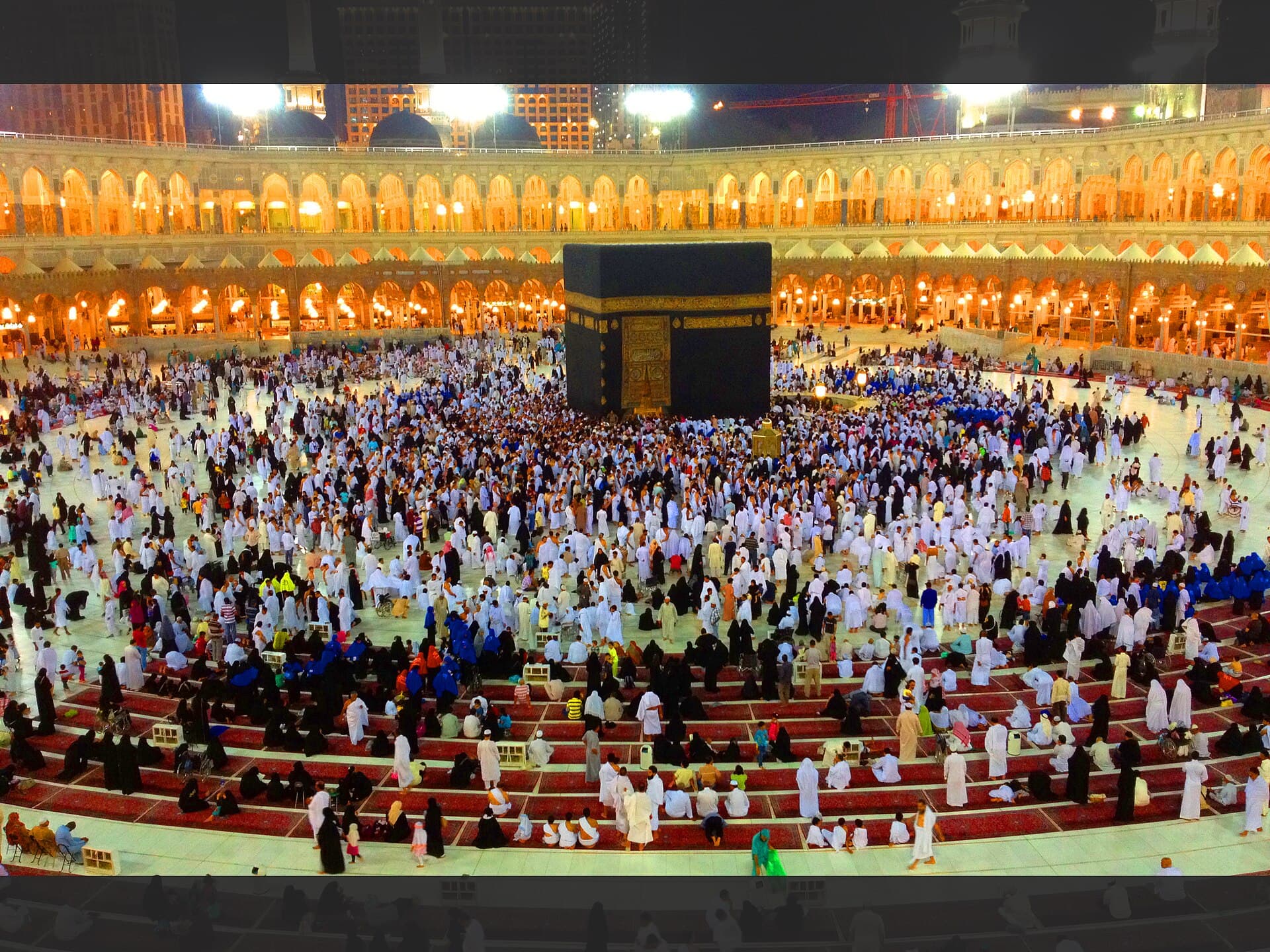
Umrah means travelling to the Sacred House in Makkah to circle it and walk between Safa and Marwah, at any time of the year. The Prophet ﷺ performed it four times; it is due once in a lifetime, on the preferred view.
“And complete the Hajj and the Umrah for God.”
“One Umrah to the next is an expiation for what lies between them.”
Stage 1 of 5: Preparation0 of 5 stages
Your Umrah in five stages
Read each stage, then press the brown button at the bottom of the stage to move on. Your progress is saved on this device.
Pillars of Umrah
Three pillars without which Umrah is invalid.
1Ihram
The intention to enter the rite at the miqat, saying “Labbayka ‘umratan”, then the talbiyah.
At stage 2: Ihram
2Tawaf
Seven circuits around the Kaaba, from the Black Stone corner, with the Kaaba on your left.
At stage 3: Tawaf
3Sa‘i
Seven lengths between Safa and Marwah, starting at Safa and ending at Marwah.
At stage 4: Sa‘i
Obligations of Umrah
A missed obligation is made up by a sacrifice; the Umrah remains valid.
- 1Entering ihram from the miqat, never crossing it without ihram.At stage 2: Ihram
- 2Shaving or trimming the hair after the sa‘i.At stage 5: Release
Stage 1Before departure
Intention and preparation
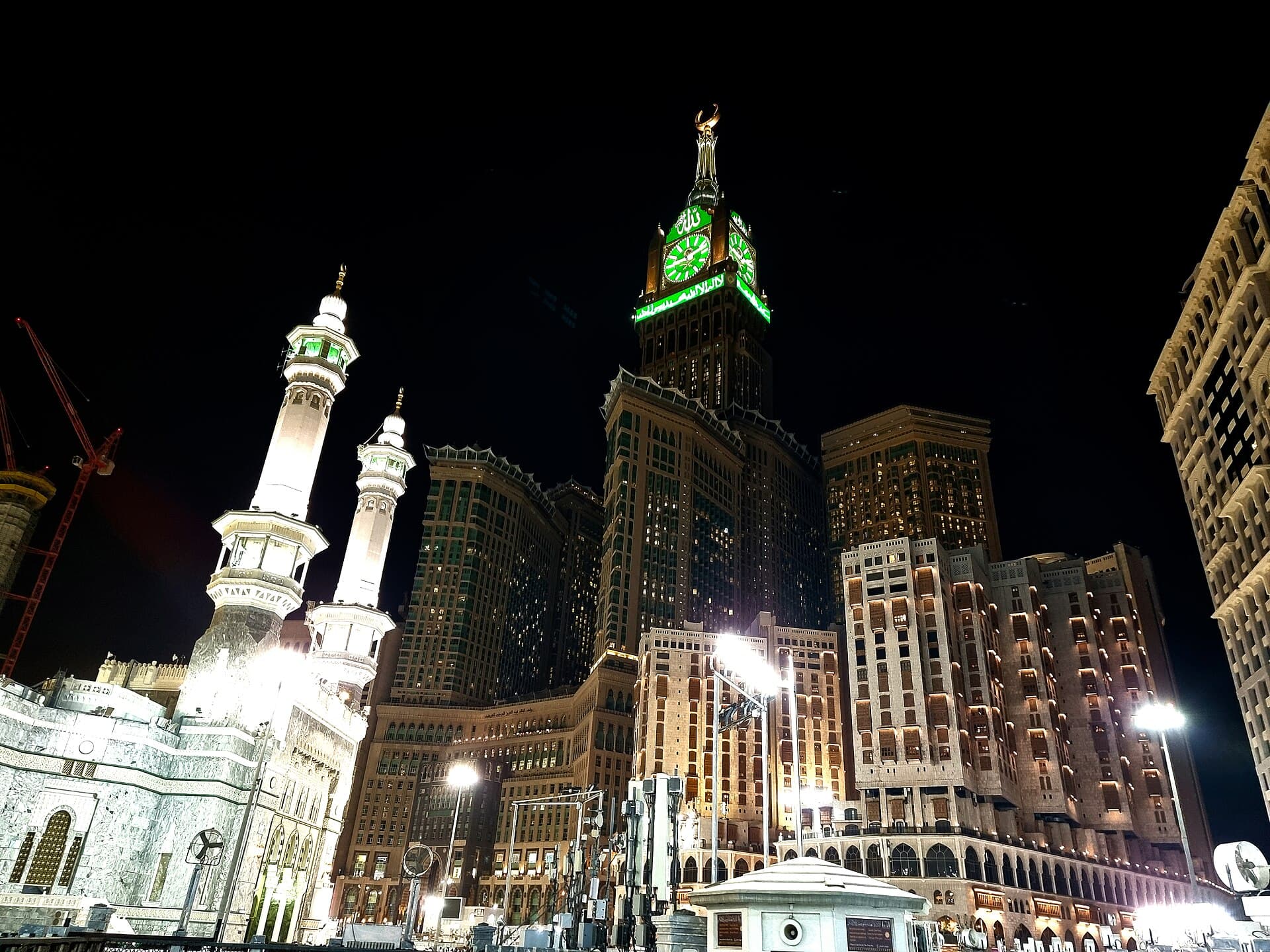
Umrah begins with a sincere intention, then preparation: booking through Nusuk, a visa, good health. Read each requirement and tick it.
Reflection
“Follow Hajj with Umrah: they remove poverty and sins as the bellows remove the dross of iron.”
Requirements of Umrah
Read each requirement, then tick it.
0 of 6 requirements read
When to perform Umrah?
Any time of the year
Umrah has no fixed season. Choose the least crowded times and avoid the days of Hajj, which belong to the pilgrims.
Umrah in Ramadan
It has a special merit, from the start of the month to the night of Eid. Perform it in your slot and pray tarawih and tahajjud with the congregation.
No repeated Umrah
Repeating Umrah on the same trip is not recommended, especially in Ramadan: neither the Prophet ﷺ nor the early Muslims did so.
Things to remember
- 1.It is very hot during tawaf and sa‘i: drink water, stay in the shade and rest after each rite.
- 2.Not allowed in the Haram: food (except dates, coffee and water), sharp objects, large suitcases and strollers.
- 3.Remember the number of the gate you came in by; main gates include King Abdulaziz Gate (1) and King Fahd Gate (79).
- 4.If you get lost, go to the nearest guidance centre around the Haram, and always hold children’s hands.
- 5.Wash your hands often, cover your mouth when coughing and wear a mask in crowds.
- 6.Use a protective cream against chafing, especially if you are diabetic.
Stage 2At the miqat
The miqat and ihram
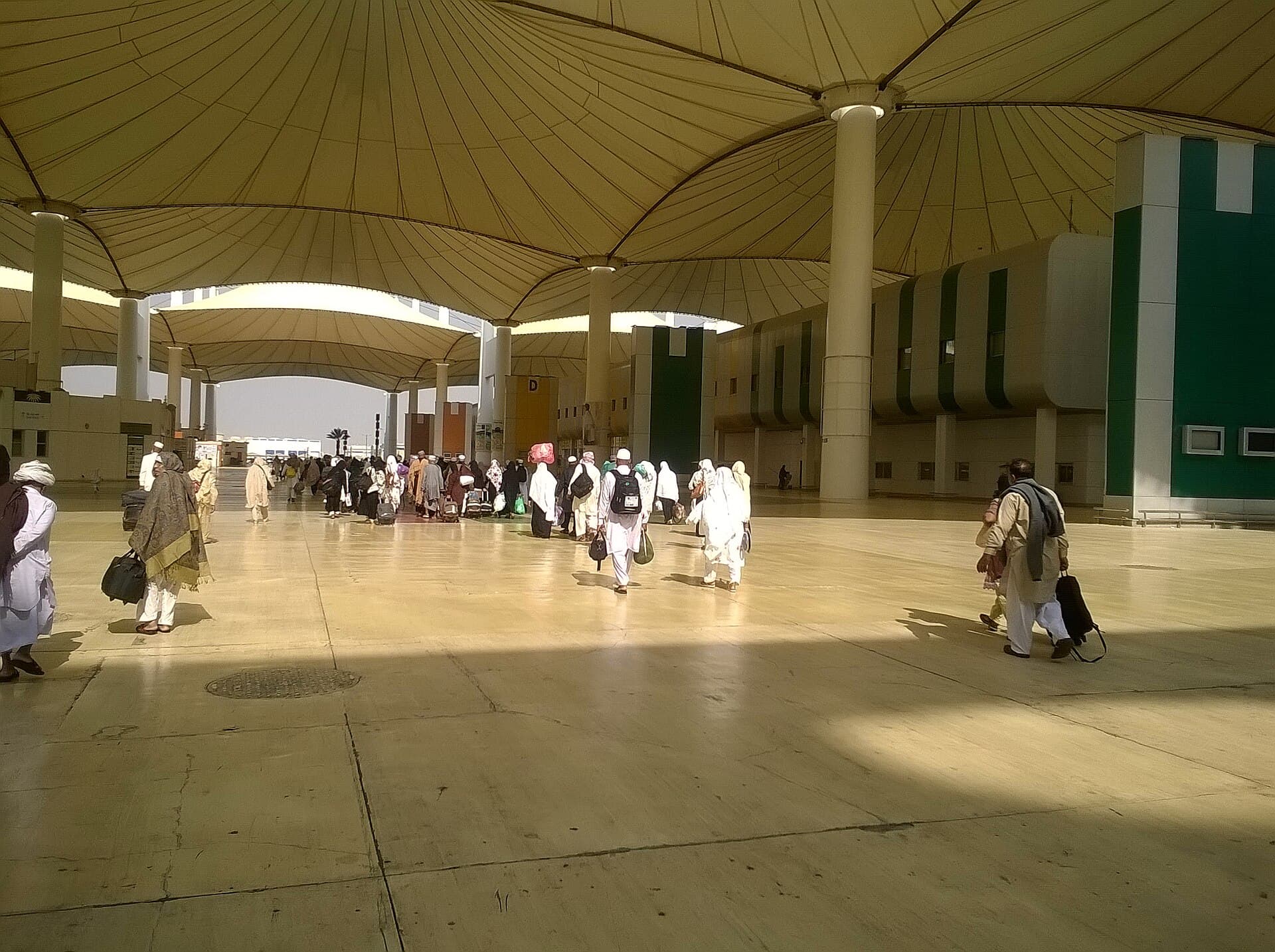
The miqat is a place set by the Prophet ﷺ that no one coming for Umrah crosses without ihram. Whoever crosses it without ihram must go back; whoever enters ihram after it owes a compensation.
Who is performing Umrah?
Your path adapts: ihram clothing, raml and the haircut differ for men and women.
The miqats
Each pilgrim enters ihram at the miqat on their route, or level with it.
Dhul Hulayfah (Abyar ‘Ali)
Miqat of the people of Madinah and those passing through it, 420 km from Makkah.
Al-Juhfah (Rabigh)
Miqat of the people of Syria, Egypt and the Maghreb, 187 km away; today people enter ihram at Rabigh, 204 km away.
Qarn al-Manazil (as-Sayl al-Kabir)
Miqat of the people of Najd and those on their route, 94 km away.
Yalamlam (as-Sa‘diyyah)
Miqat of the people of Yemen and those on their route, 115 km away.
Dhat ‘Irq
Miqat of the people of Iraq and those on their route, 92 km away.
Note
Sunnahs before ihram
- 1.A full bath or ablution; when flying, the bath can be taken at home before leaving for the airport.
- 2.Personal grooming (nails, etc.), since it is forbidden once in ihram.
- 3.Entering ihram after a prayer, obligatory or two rak‘ahs.
- 4.The intention of Umrah, saying “Labbayka ‘umratan”, then the talbiyah.
The talbiyah
لبّيك اللهمّ لبّيك، لبّيك لا شريك لك لبّيك، إنّ الحمد والنعمة لك والملك، لا شريك لك
“Here I am, O God, here I am…” It begins with ihram, men raise their voices, and in Umrah it stops at the sight of the Kaaba or when the tawaf begins.
Note
Note · What ihram forbids
Pillar · Ihram
Obligation
Choose “Man” or “Woman” to complete this stage.
Stage 3Masjid al-Haram
Tawaf around the Kaaba
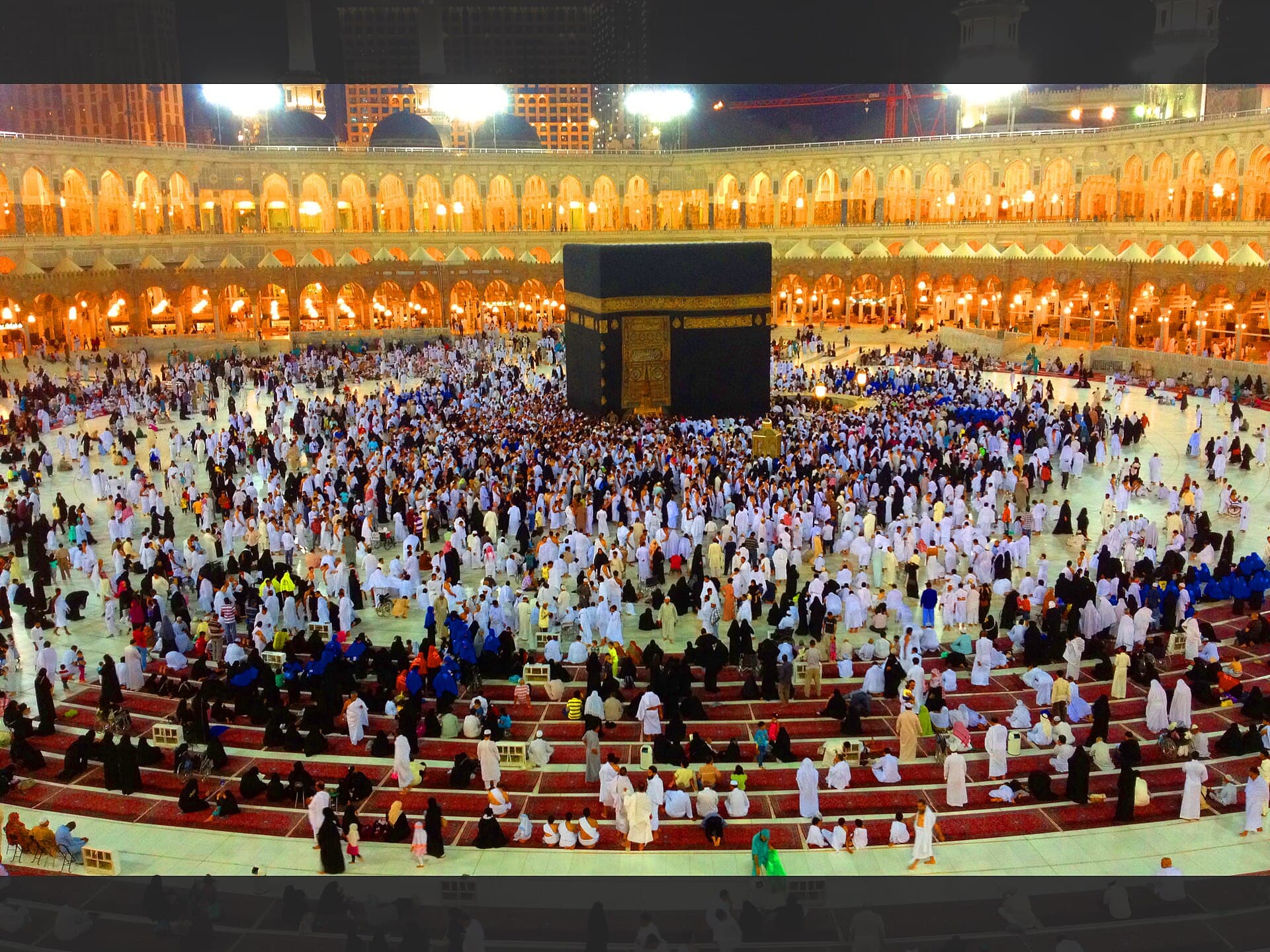
You start from the Black Stone corner with the Kaaba on your left, saying “Allāhu akbar” as you pass it at the start of each circuit, for seven circuits. The talbiyah stops when the tawaf begins.
Tawaf: seven circuits
Optional: press the button at each round to learn the number and the order.
With the Kaaba on your left, start from the Black Stone corner; each full circuit counts as one.
Circuit 1 of 7
Note
Sunnah
Sunnah
Sunnah
Sunnah
Note
Pillar · Tawaf
Reflection
“With every step around the House, God records a good deed, erases a sin and raises a rank.”
Stage 4The Mas‘a
Sa‘i between Safa and Marwah
You start at Safa and finish at Marwah: seven lengths; on each hill, raise your hands facing the qiblah to say “Allāhu akbar” and supplicate.
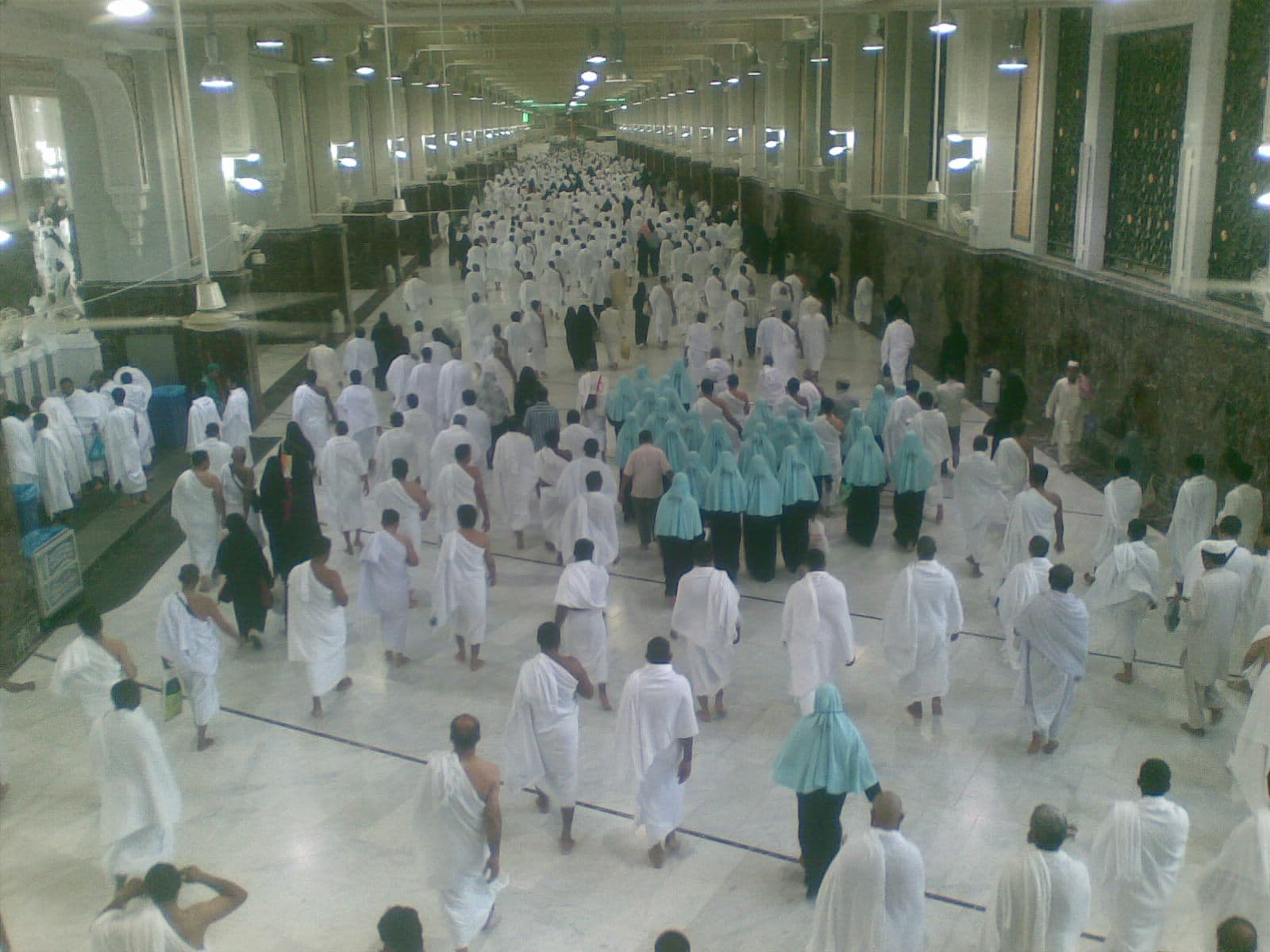
Sa‘i: seven lengths
Optional: press the button at each round to learn the number and the order.
Safa to Marwah counts as one, Marwah to Safa as another; the sa‘i ends at Marwah.
Length 1 of 7 · Safa to Marwah
Sunnah
Advice for the sa‘i
- 1.Follow the signs from the Mataf to the Mas‘a, and start at Safa.
- 2.The upper floors are less crowded than the ground floor.
- 3.Supplicate and remember God as you walk, without stopping where you block the way.
- 4.If the prayer starts, pray with the congregation, then continue from where you stopped.
- 5.If you are diabetic: start after your treatment and a meal, and rest at the first sign of low sugar.
- 6.Sa‘i may be done in a wheelchair when tired.
Pillar · Sa‘i
Reflection
“Safa and Marwah are among the rites of God” — in the footsteps of Hajar, mother of Isma‘il.
Stage 5After the sa‘i
Shaving or trimming
Shaving or trimming completes your Umrah and releases you from ihram: what was forbidden becomes allowed again.
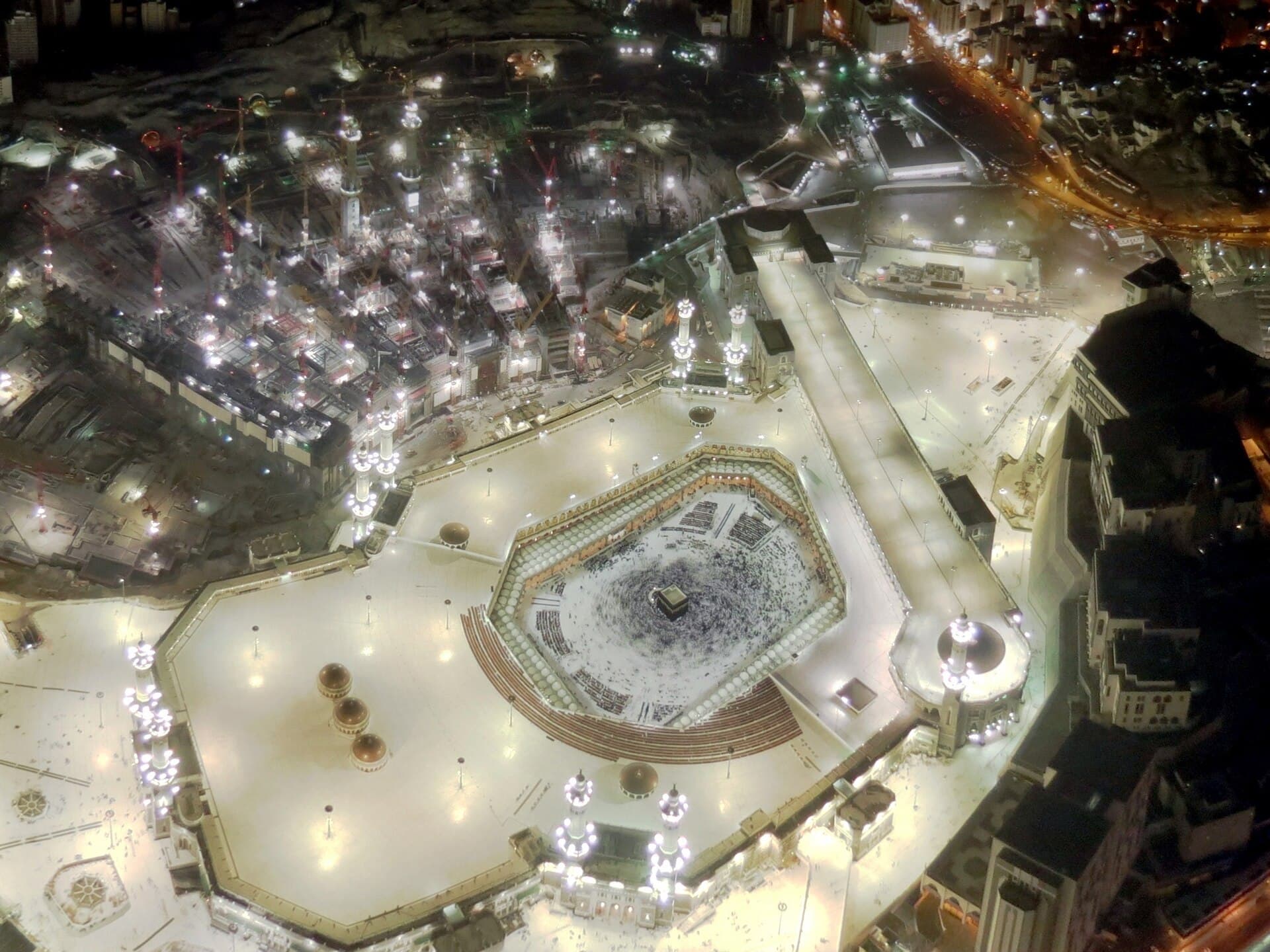
For men and for women
For men
Shaving is better: the Prophet ﷺ prayed three times for those who shave and once for those who trim. If your Umrah comes shortly before Hajj, prefer trimming to keep the shaving for Hajj. The whole head is concerned, starting with the right side.
For women
Gather your hair and cut its ends, the length of a fingertip, about 1 to 2 cm; women do not shave.
At the barber’s
- 1.Have it done in the licensed shops around the Haram, never in the Mas‘a.
- 2.Check the razor is disposable, with a plastic handle.
- 3.Check the barber has changed his tools and washed his hands before starting.
Obligation
Note
Your journey is not complete yet
5 stages left
Your seals
- Preparation
- Ihram
- Tawaf
- Sa‘i
- Release
Check your understanding
Five questions to anchor what you have learned.
1.How many pillars does Umrah have?
2.When does the talbiyah stop in Umrah?
3.Where does the sa‘i start?
4.For whom is raml a sunnah?
5.How much hair does a woman cut?
Travel with a verified agency
Safaria’s Umrah programmes are run by licensed agencies, on real dates, with a day-by-day programme in photos and on the map.